Universal Radios & Systems
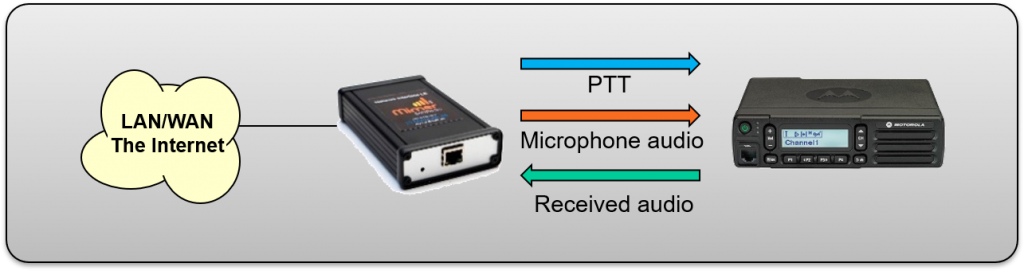
In parallel with our line of interfaces that remote control the radios more advanced functionality, we also have a line of interfaces, that will only handle the audio and the PTT. On the other hand this is often enough for many users.
The larger interface also opens up for more functions like line transformers, tone decoders, full duplex and I/O connections.
Network Interface
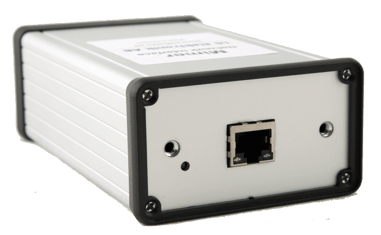
This is the more intelligent box with more alternatives. It is alwyas delivered in the larger “silver box”.
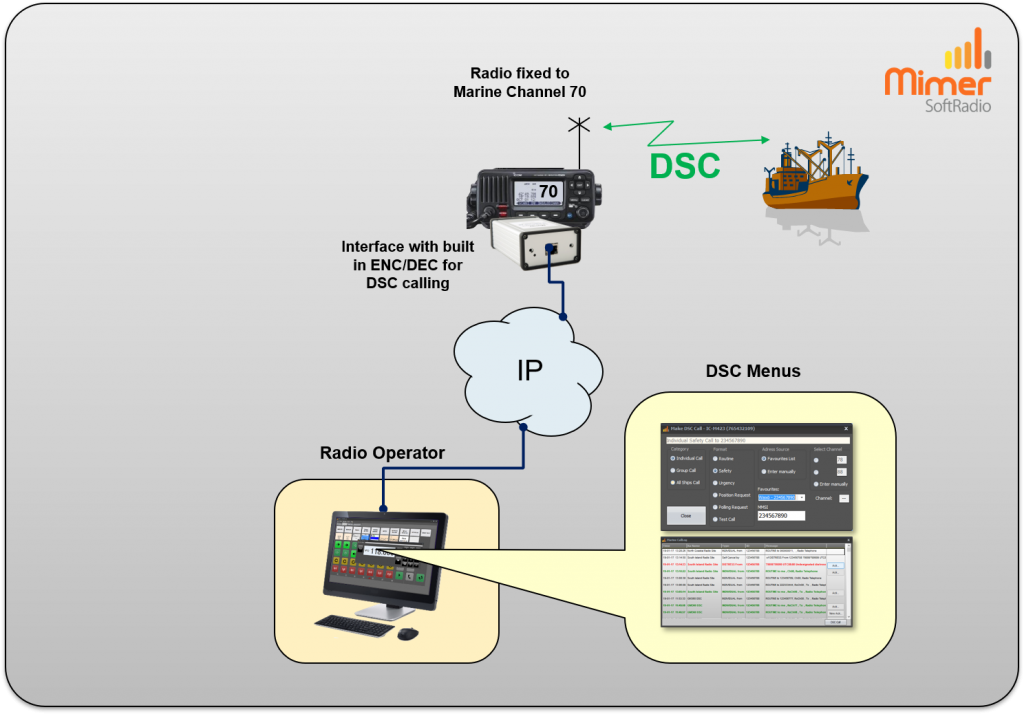
The standard interface can be fitted with extra equipment to handle special signaling, for example DSC or CCIR. It can also be fitted with transformers to handle audio at line levels, typical 600Ohm/-10dB. It has I/O ports, and it can also be programmed for duplex audio.
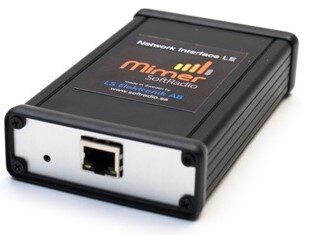
Network Interface LE
This is the simple and cheaper alternative. It is as standard delivered in the small black box.
The small LE interface, is fixed for connection to the audio levels used by the microphone and the speaker on a standard fixed mobile radio or base station. It can only handle simplex audio. Neither hardware or firmware can handle any “extras”.
Optionaly delivered in the larger “silver box”.
Special versions of the NetworkInterface
For customers special needs, we have built interfaces with extra functions. For example there is one version with a relay output (with or without audio functions) that can be controlled from SoftRadio. The relay has for example been used for turning a repeater on/off and it has also been used for turning on/off a landing beacon at a helcopter pad (NDB).
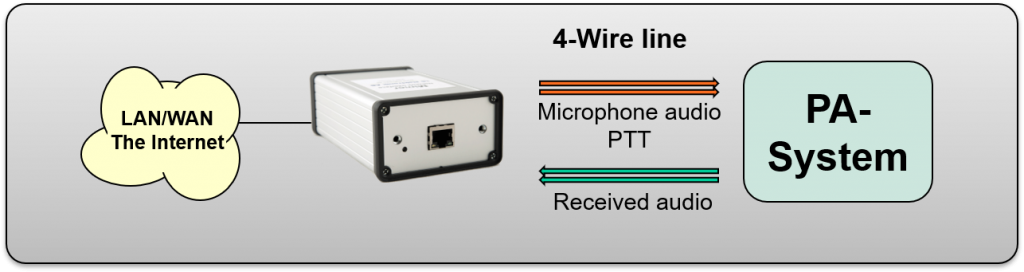
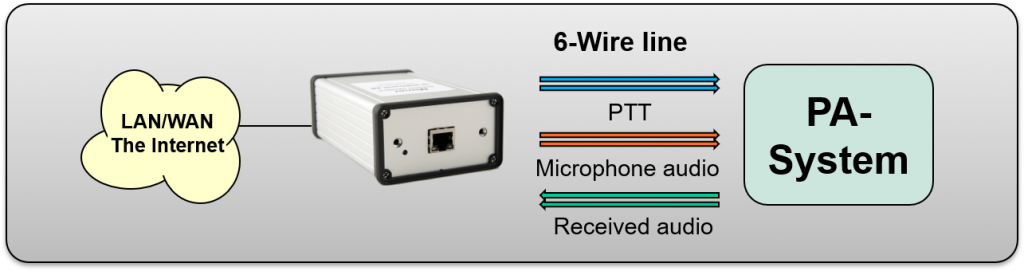
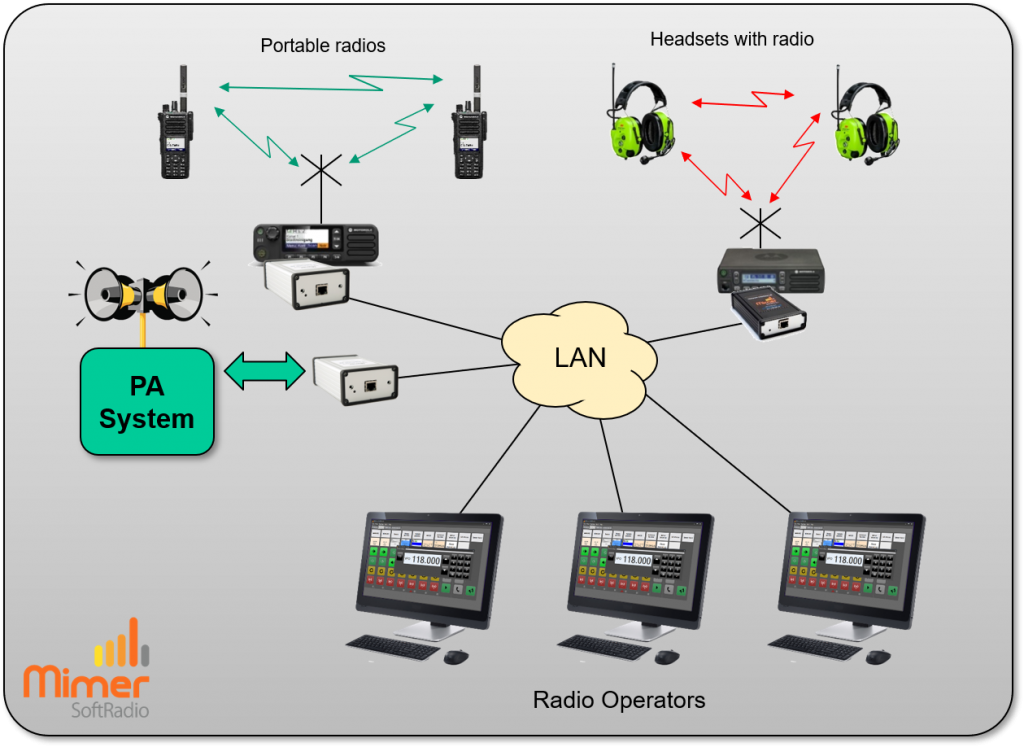
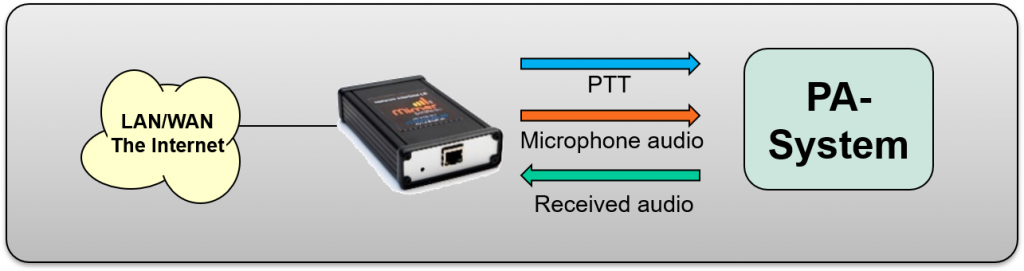
Other versions have been specifically made to get the audio from the customers ambient listening microphone or to send audio to the customers PA or PAGA systems.
Please ask our Sales team about your needs
Network Interfaces Mounting
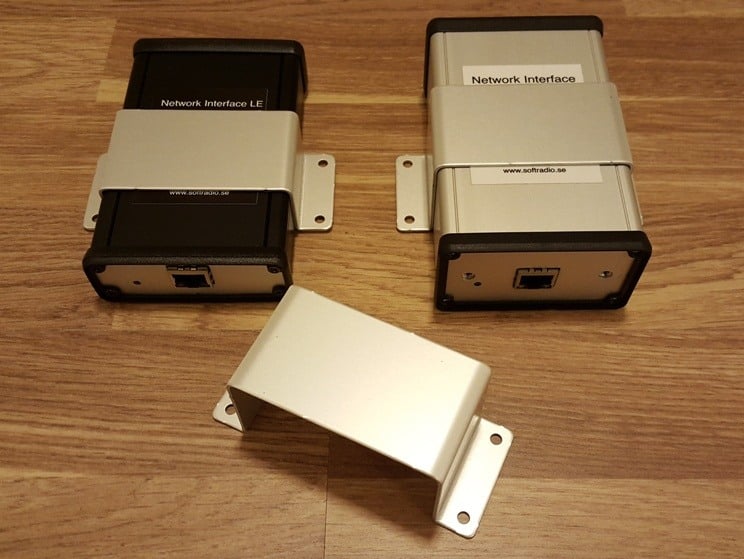
On the “silver box” there are two threaded holes, M4, on the front panel that can be used for panel mounting.
For both boxes there are also mounting brackets available.
I/O Ports
There are extra I/O´s on the large interface that can be activated and read from the operator software.
You then need the option “Custom Functions Panel”, where custom designed scripts will give you extra keys and indicators.
Useful for exampel to monitor the VSWR or emergency power at the base station or to turn the repeater function on/off in the base station.
Interfaces for generic types of radios
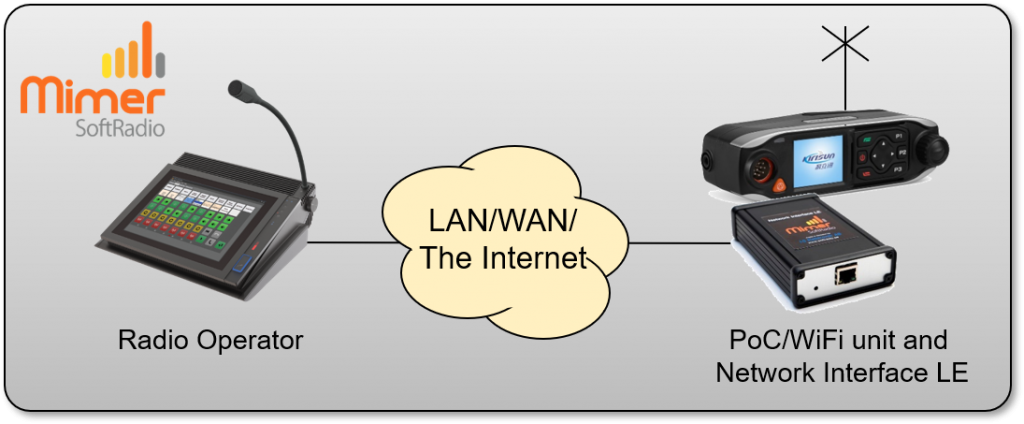
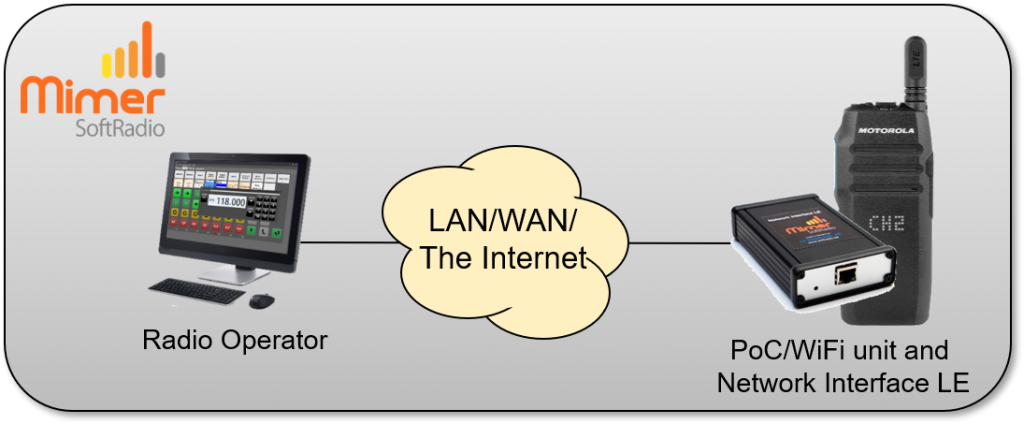
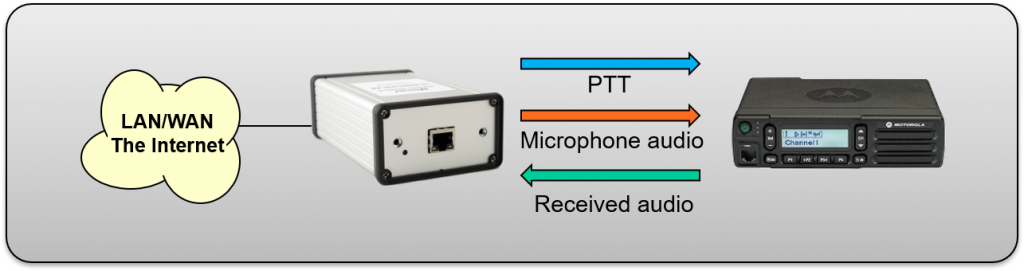
These generic interfaces can be used both for single channel analogue radios or for single talkgroup radios in Tetra, DMR or PoC systems. Connection is done through E&M signalling on the radio, plus PTT. There is no need for a Squelch output from the radio. The interface detects the audio level. Like all the other interfaces you can connect through all types of IP; LAN, WAN, the Internet, 4G, Satellite etc. You use the same dispatcher software, Mimer SoftRadio, as for all other interfaces and you can mix and match with the other systems in the Mimer SoftRadio family. As with all other SoftRadio you can operate several radios from one dispatcher and each radio can be operated from several dispatchers. Each dispatcher can also use other types of radios in a mix.
Read more here.
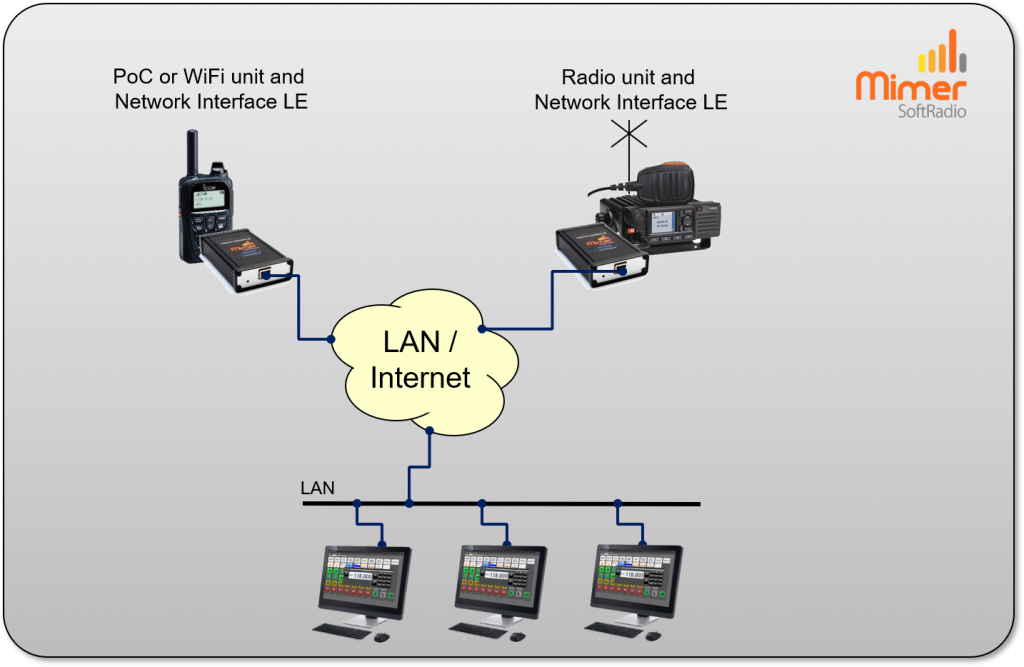
An Icom PoC/WiFi radio and a Hytera standard radio remote controlled by three operators.
Read more here.
Shared Radio Access
Local use when several dispatchers want to share one radio.
Remote Radio Operation
Remote use where a dispatcher at one location want to talk to radio users at a different location.
PA/PAGA
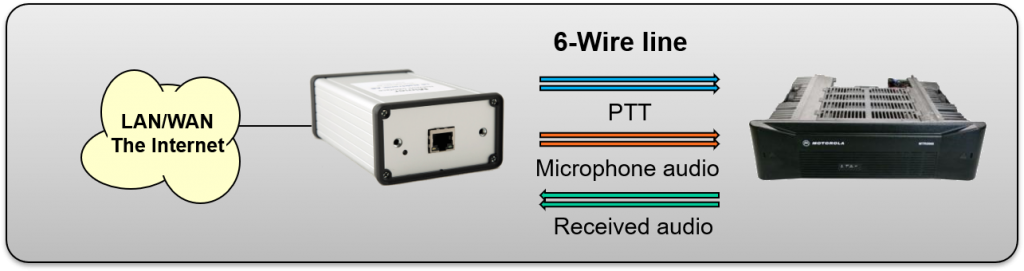
Connection to PA/PAGA systems.
Talkgroups
At a large system where the operators have both radios with a fixed talkgroup and radios with full function. With the universal interfaces the most used talkgroups can all be monitored in parallel.
CrossPatch Between Radio Systems
CrossPatch between Marine radio channels and other two way radios, like analogue, IDAS, DMR, Tetra, Wave or PoC.
Connection & Configuration Examples
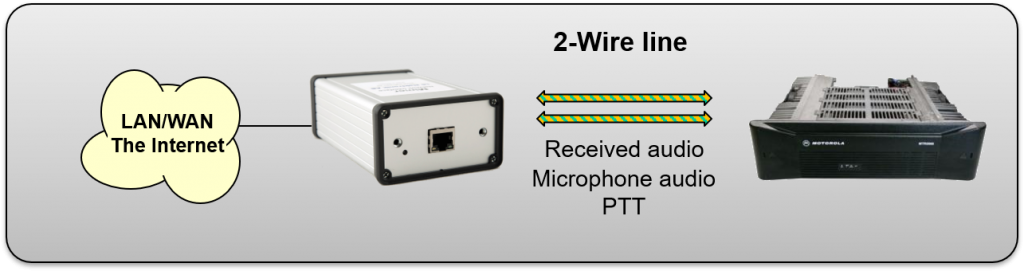
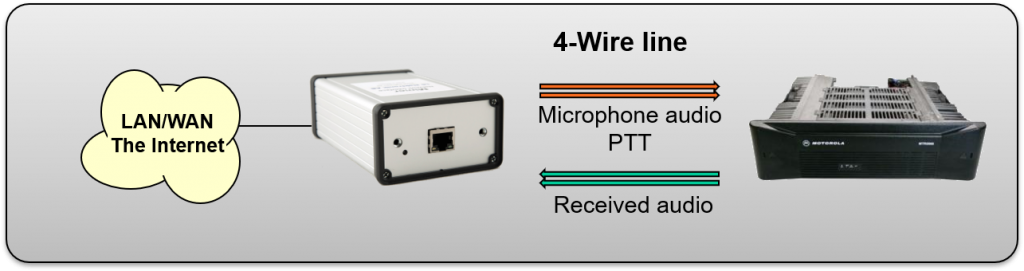
Below are some different configurations possible with the universal interfaces. More alternatives are possible so please ask.
(The radios in the pictures are just examples to illustrate a fixed radio and a base station)
System Examples:
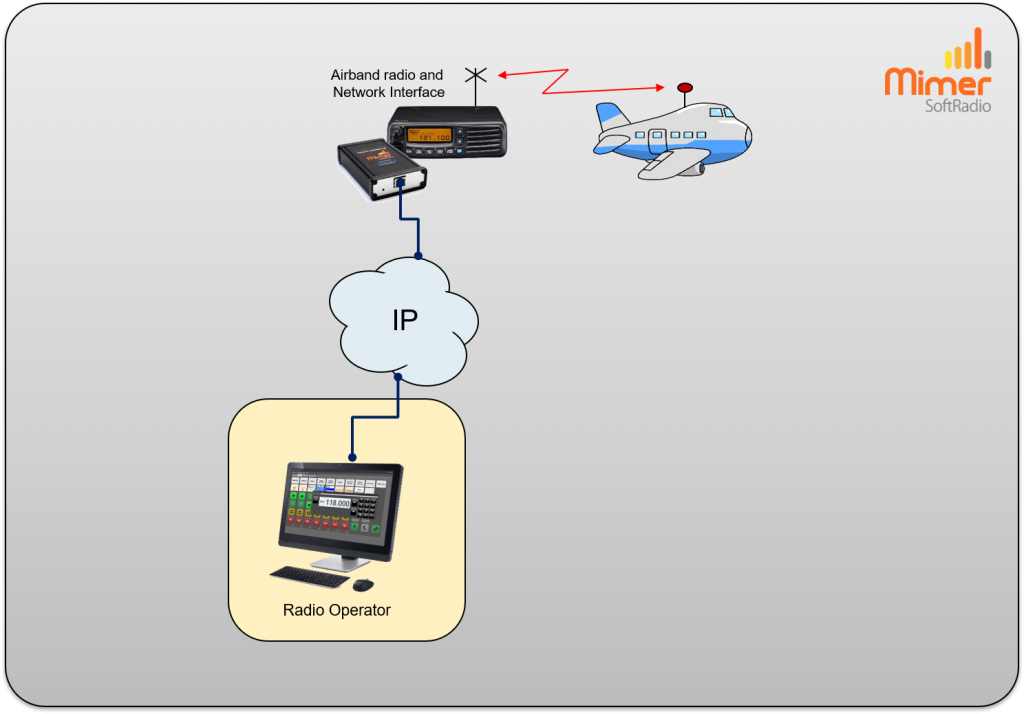
Operator working with a fixed
channel Airband radio
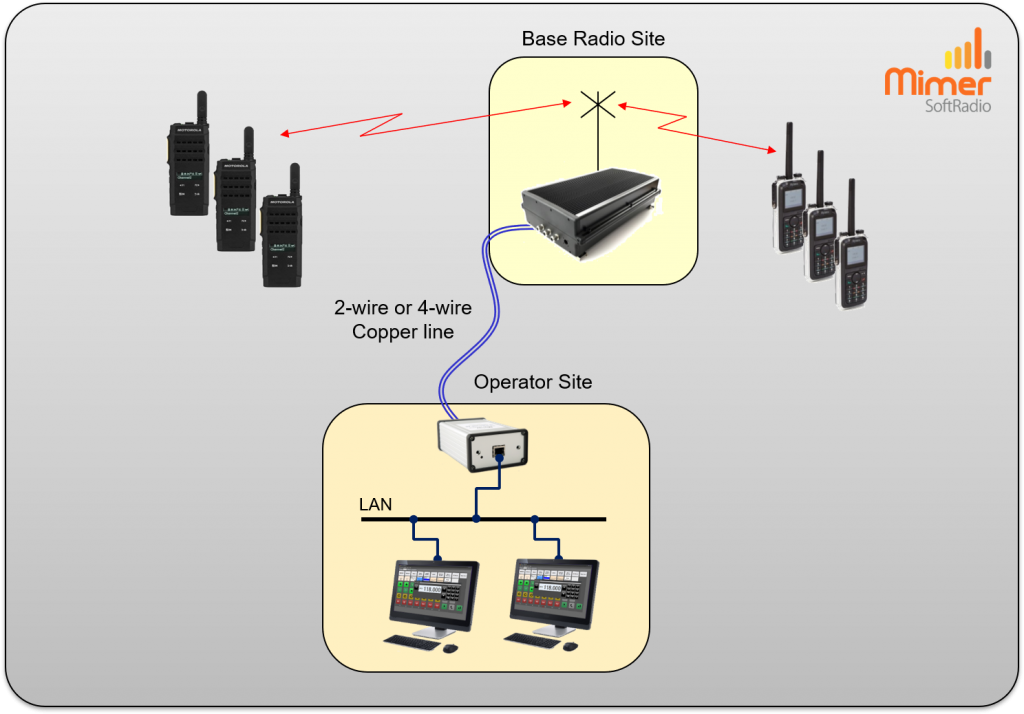
Connecting to the radio through an old copper wire. IP is only used internally at the operator site.
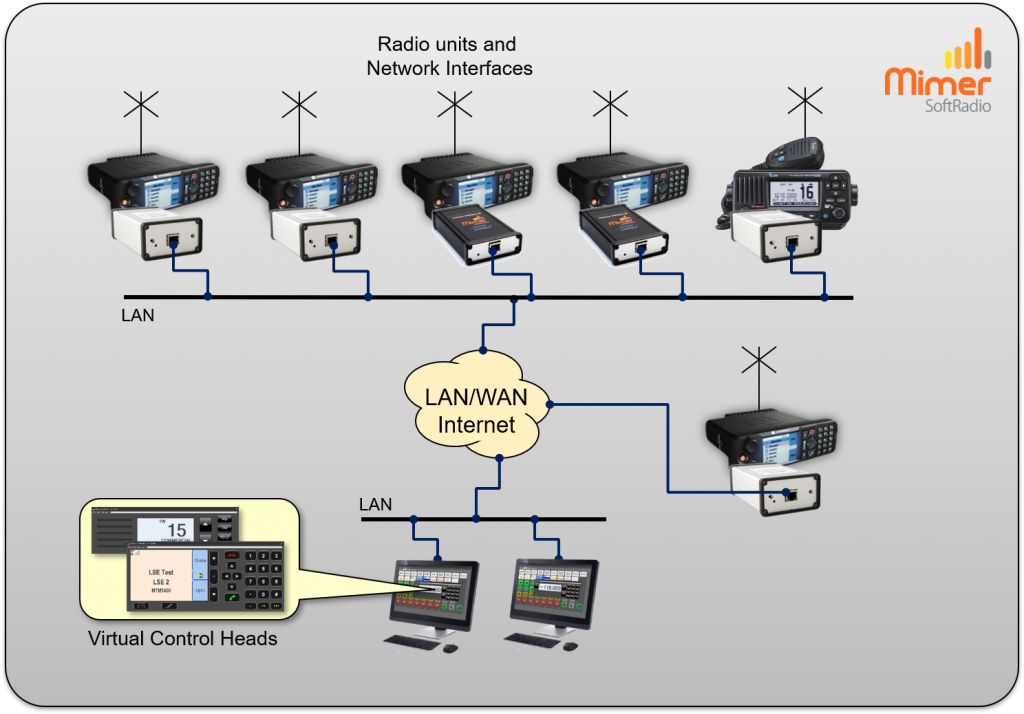
Operators working with a mix of advanced radios and Tetra radios set to a fixed talk group
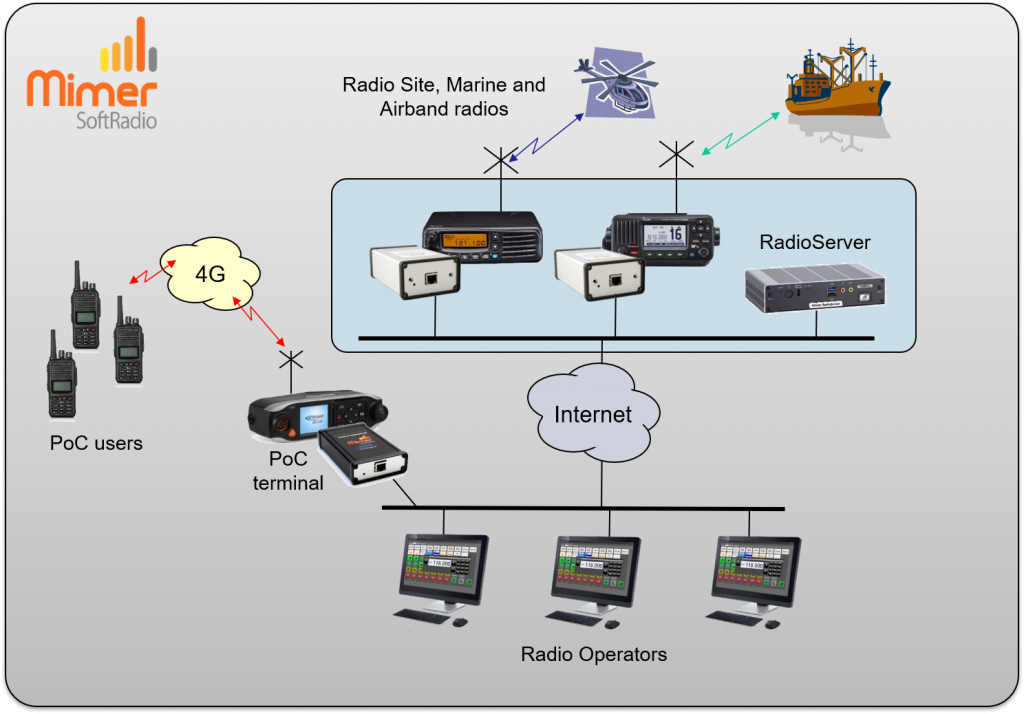
Operators working with both marine and airband radios as well as a PoC talk group. The operators can cross patch calls between the systems.
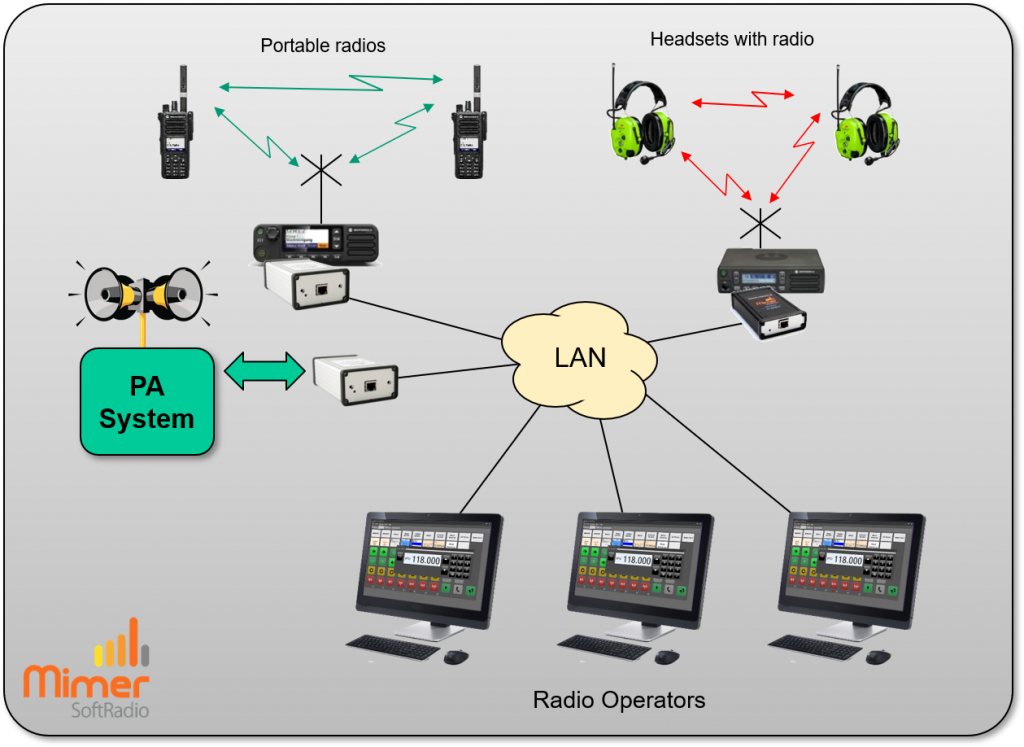
The operators can talk to all radios, all headsets (with radios) and the PA-system.
In an emergency they can make an all call to both radio users and the PA-system at the same time.
They can cross patch calls between the radio users and the Headset users.