Mimer TGW
How Terminal Gateway Connects to Tetraflex
Using the Terminal Gateway gives you nearly full control of the Tetraflex system. All the functions and operator needs are there, except the list of registered subscribers and the ability to build DGNA groups.
When using the TGW a server software with virtual network interfaces is connected to the Tetraflex system. Each dispatcher then connects to these virtual network interfaces in the same way as with any other network interface connected to a donor radio.
Functionality
We have tried to reflect the operators most important needs when monitoring and talking to the Tetra users.
All those functions are easily accessible, while other functions are hidden or not even implemented since they are just in the way of daily use.
TalkGroup talk and listen
Contacts list and calls
SDS and status, send and receive
Emergency status handling
Positioning together with Mimer MapView
Operation
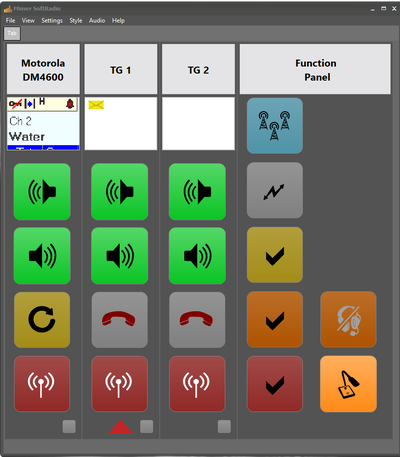
The operator will see a GUI that looks and behaves very much like standard SoftRadio does for other radio types. Each connected Talk group will be represented with a device panel that lets the operator make calls and answer calls.
All groups can be monitored in parallel and at the same time as other radio communication. When there are settings to do, or a message to send, a device window, much like the virtual control heads for radios, can be opened.
INTERFACE
System Images
The Mimer SoftRadio interface adapts in real time to show call status, messaging, and emergency alerts at a glance.
Operator Talking
Operator View
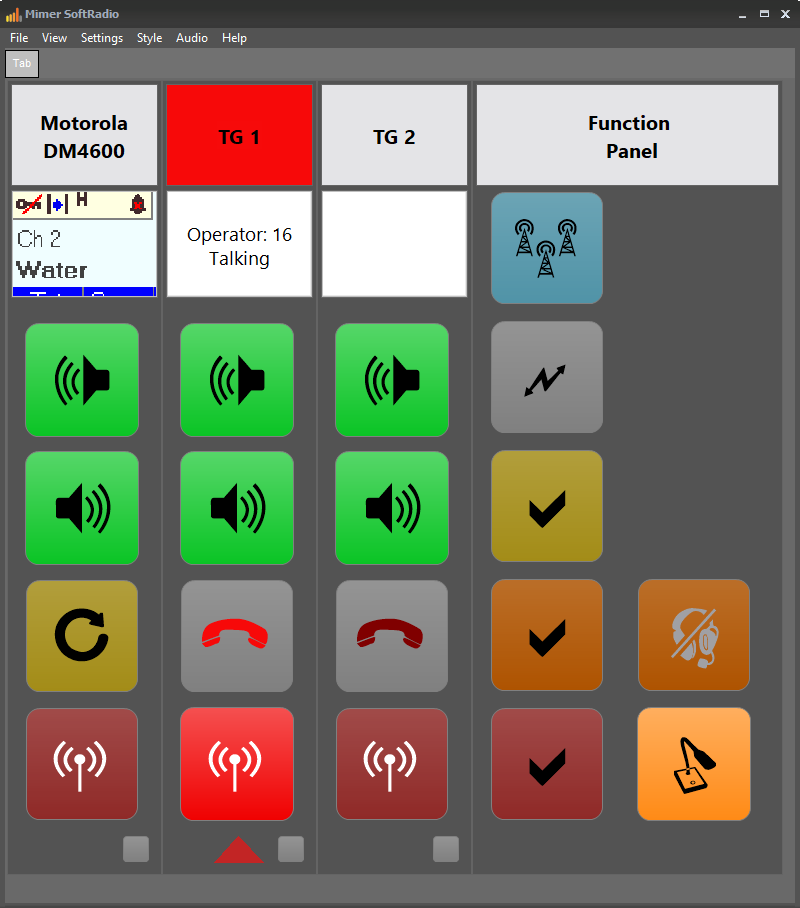
Operator 16 transmitting — the header turns red while PTT is active.
Incoming Talk
Operator View
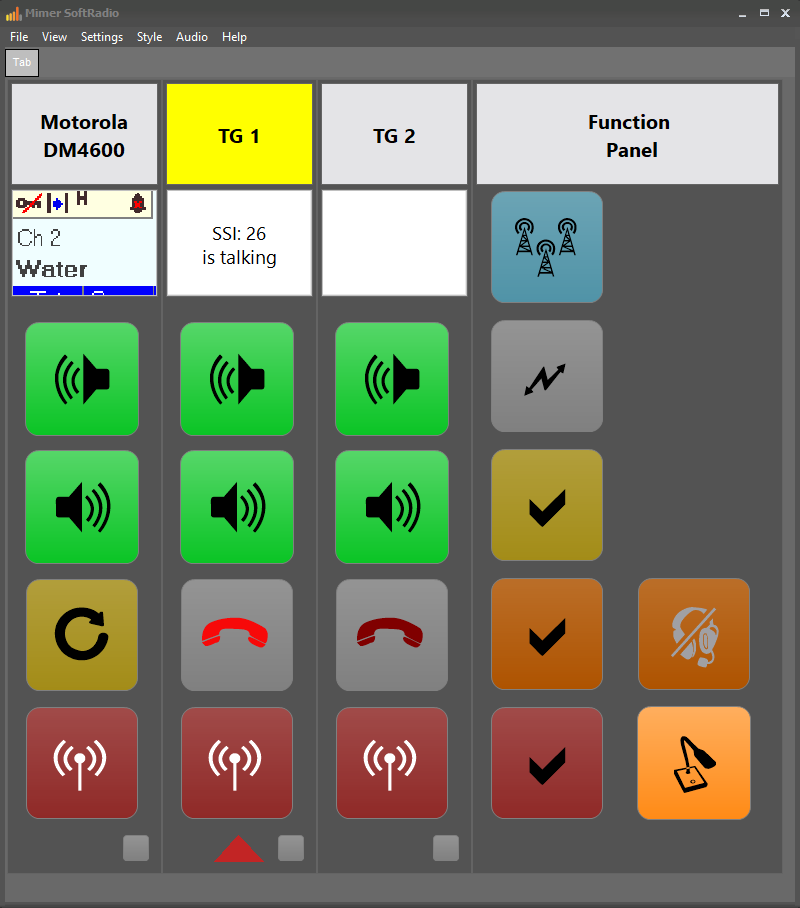
SSI 26 is talking — the header turns yellow to indicate activity.
Group Call
Operator View
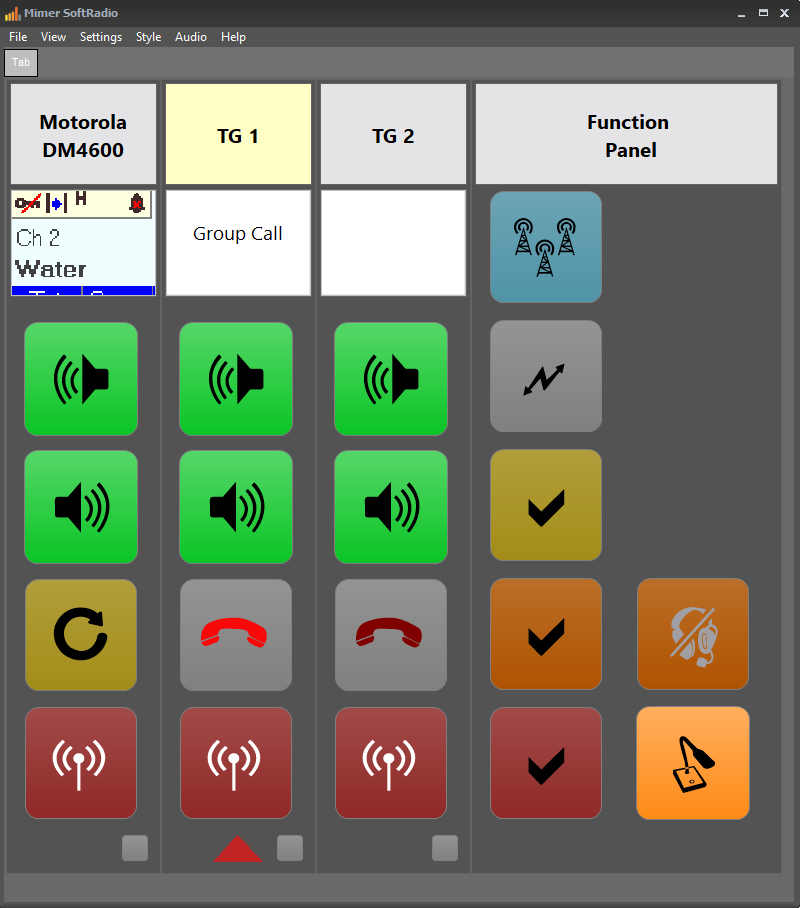
TalkGroup 1 active with a group call in progress.
Messages & Status
Messaging
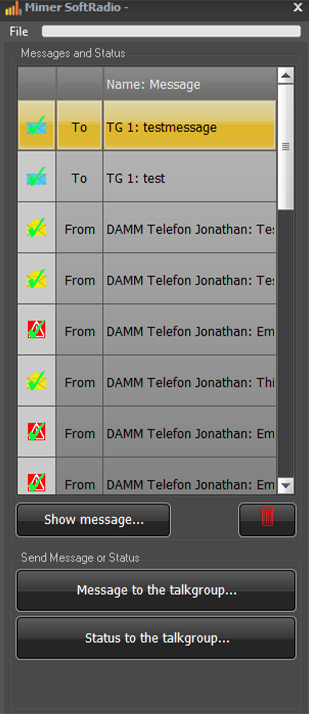
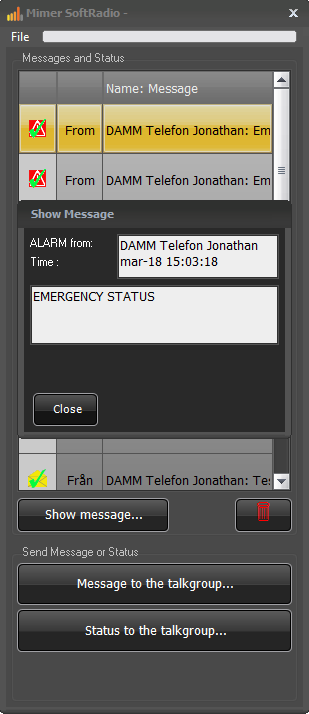
Send and receive SDS messages and status updates to the talkgroup.
Emergency Status
Messaging
Emergency alerts are shown immediately with full sender details and timestamp.