Mimer SoftRadio API
With the use of SoftRadio API, developers of other dispatch solutions can integrate SoftRadio and make use of the functions within SoftRadio.
Control Any Radio Via Mimer API
// Connect to SoftRadio Service const ws = new WebSocket('wss://your-server/api'); ws.onopen = () => { ws.send(JSON.stringify({ "Version": "2.0", "MessageType": "ClientLogin", "Parameters": { "Username": "dispatcher_1", "OperatorID": 10, "RequestedFunctions": [{ "Function": "RadioAudio", "AudioMixes": { "AllRadios": [101, 102, 103] }, "AudioProtocol": "WebRTC" }] } })); };
// Transmit on a radio (PTT) function pushToTalk(radioId) { ws.send(JSON.stringify({ "Version": "2.0", "MessageType": "RadioTransmit", "Parameters": { "TargetID": radioId } })); } // Send every second while PTT held setInterval(() => pushToTalk(101), 1000);
// Listen for status updates ws.onmessage = (event) => { const msg = JSON.parse(event.data); if (msg.MessageType === "Status") { console.log(`Radio ${msg.Parameters.FromID}`); console.log(`RX: ${msg.Parameters.Receiving}`); console.log(`TX: ${msg.Parameters.Transmitting}`); } };
What is Mimer API?
Radios connect via Mimer Network Interfaces
Hardware or virtual interfaces developed by LS Electronics, each preconfigured for a specific radio model, Tetra, DMR, P25, or analog. They handle the radio-side protocol. For systems like Motorola Dimetra, a Virtual Network Interface connects directly to the core (no donor radios). For remote sites or autonomous ships, a simple voice + PTT connection using donor radios is also supported.
Mimer API exposes a WebSocket API
Your application connects over WebSocket (WSS), authenticates with Username and OperatorID, and requests the functions it needs, audio streams, PTT control, status monitoring. All communication is JSON. The API connects to the Mimer Network Interface over TCP (internet) or UDP (local network). The Network Interface processes and forwards commands such as transmitting, changing channels, and handling calls.
Your software controls the radios
Transmit, receive, monitor call status, and manage audio mixes. Multiple operators can share access to the same radio, seeing the same display and hearing the same audio.
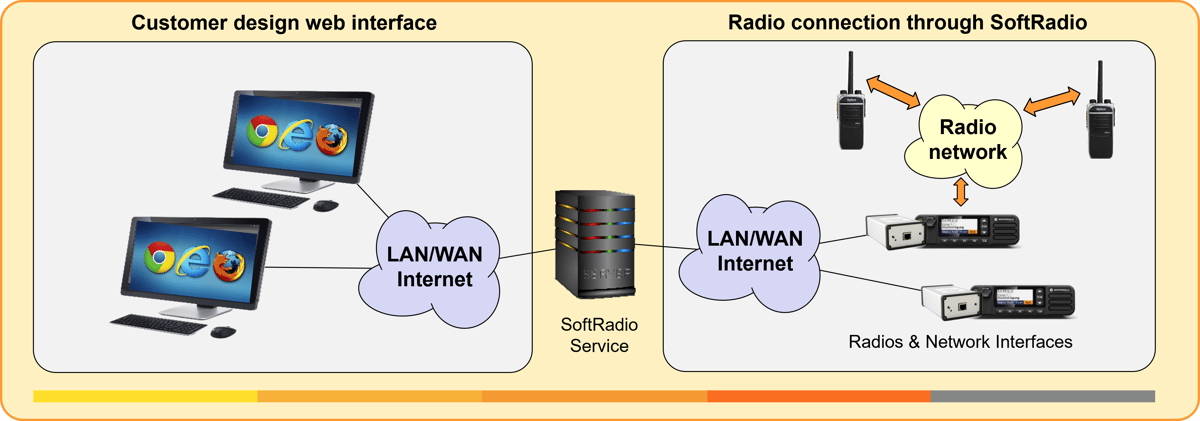
Custom browser GUI
Customers have built browser-based GUIs for radio control, tailored to their specific operational needs
FOR DEVELOPERS
Getting started
Three steps from nothing to controlling a radio from your code.
Connect to the API
Open a WebSocket connection to Mimer API. Authenticate using your Username and OperatorID.
Request radio functions
On login, specify which functions you need, audio control, status monitoring, call management and which radio MimerIDs to access.
Send and receive
Transmit audio via WebRTC or RTP. Receive real-time status updates: who is transmitting, which radio, what type of call. All over the same WebSocket.
CAPABILITIES
What the API provides
A complete set of radio control functions accessible through a single WebSocket connection.
Universal Radio Control
Real-time Audio Streaming
Developer-friendly protocol
CHAP authentication
Multi-operator access
Tetra Integration
Group calls, messaging & emergency
Supports group calls, individual calls and emergency functions depending on the connected radio system. Full call management through the API. These features are currently supported only with the Dimetra system.
VoiceLog & RadioServer
TECHNICAL DETAILS
Specifications
Specifications Overview
| Protocol | WebSocket (WSS), JSON |
| Audio |
WebRTC (Opus), RTP (G.711)
|
| Latency |
<200ms end-to-end
|
| Platforms |
Windows, Linux
|
| Authentication |
CHAP challenge- response
|
| Transport | TCP (internet), UDP (local network) |
| Functions | Group calls, text messaging, emergency |
|
API version
|
2.0 (backwards compatible)
|
Supported radio systems
Through Network Interfaces and donor radios we support any type of radio.
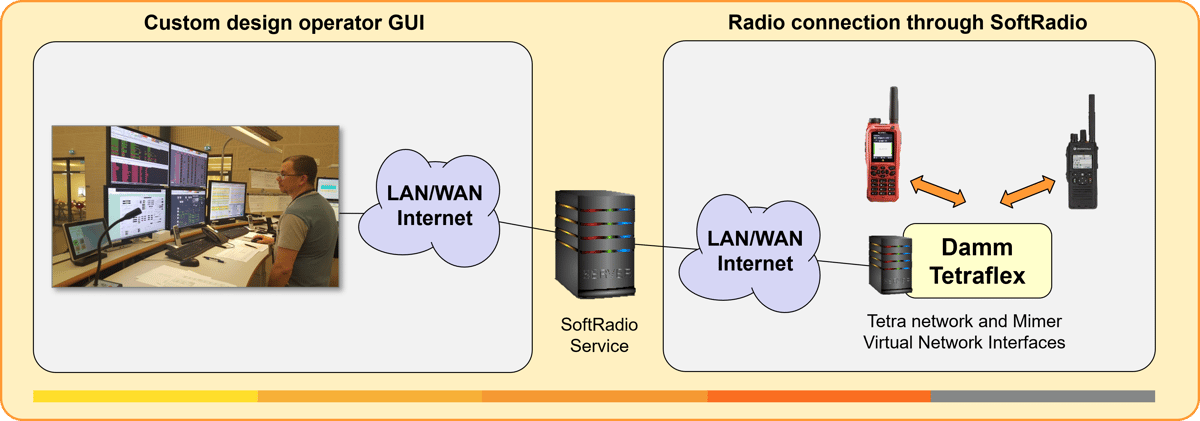
We also support Tetra systems from Motorola and Damm, by direct connection without donor radios.
INTEGRATIONS
Mimer API - System Examples
A few examples of what this API enables in production.
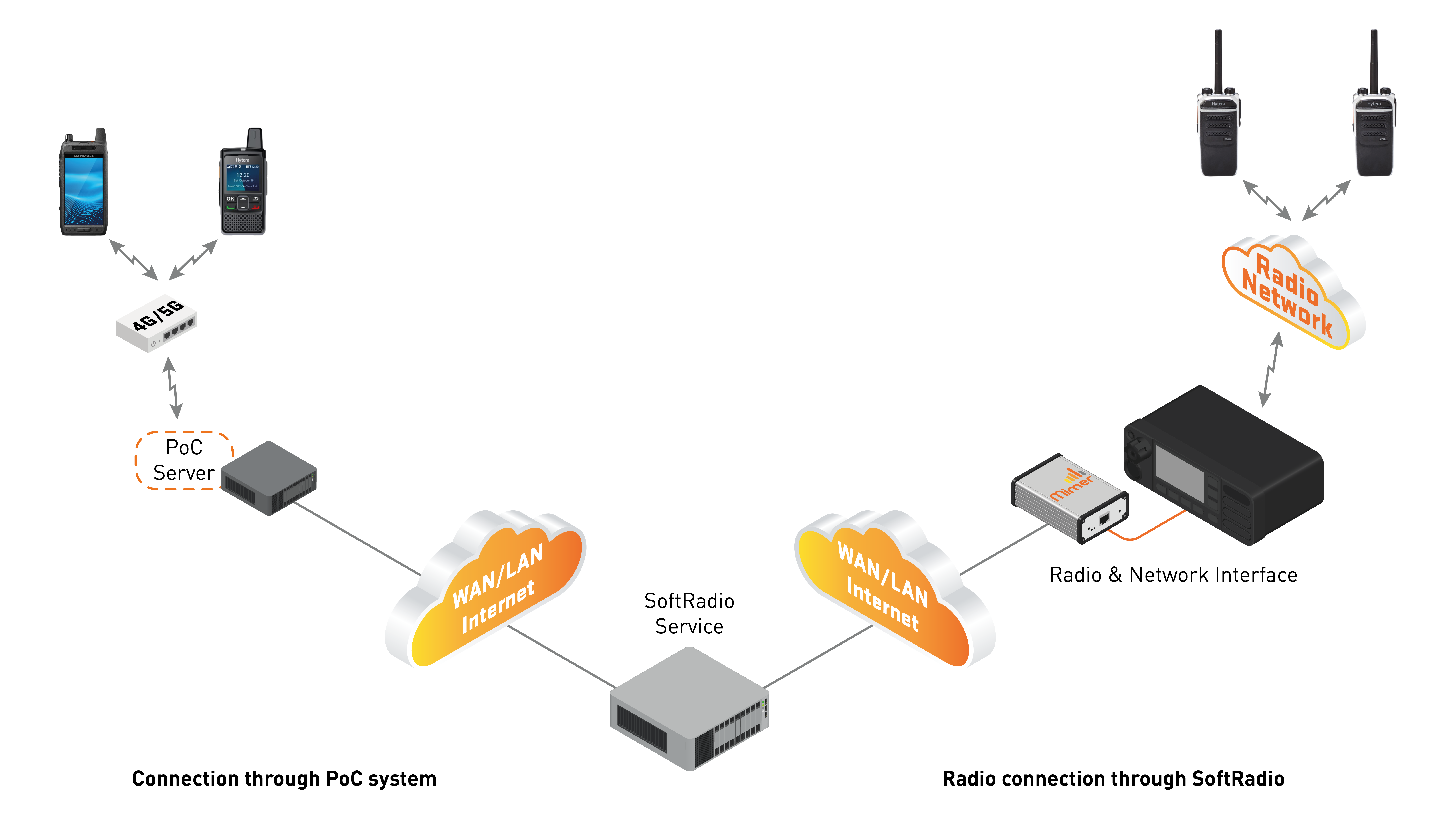
PoC bridging
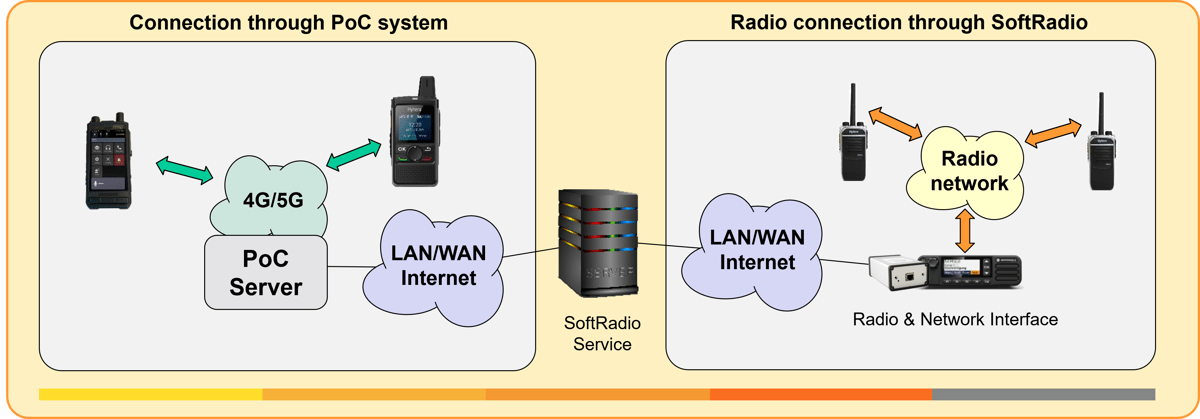
Push-to-Talk over Cellular platforms connected to professional radio networks. A PoC system provider makes their own interface to Mimer API, connecting PoC talk groups to one or more radio channels.
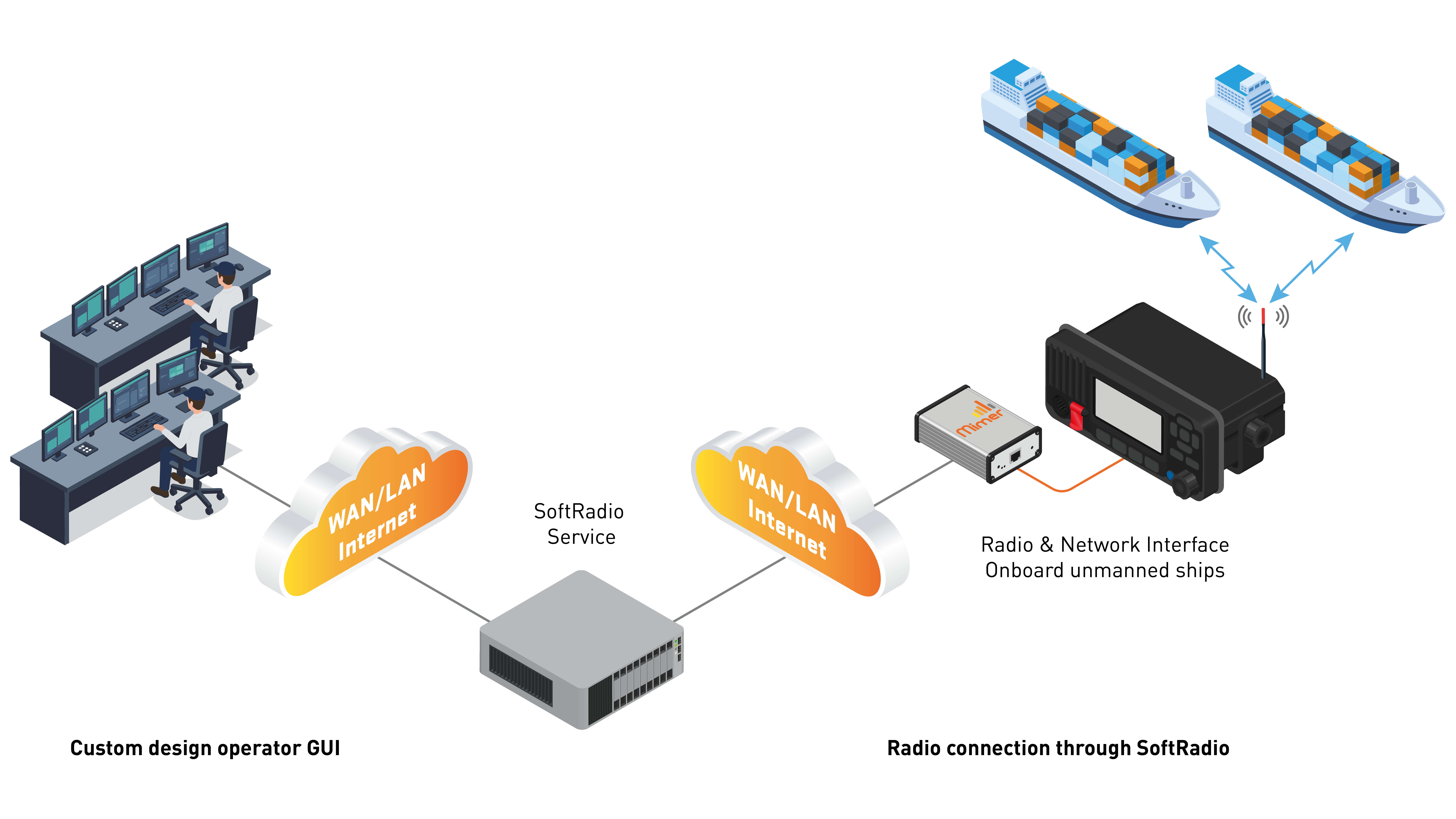
Autonomous vessels
An example with a company running autonomous ships, where the onboard radio is remote controlled. This radio can be operated from the companies own software platform.
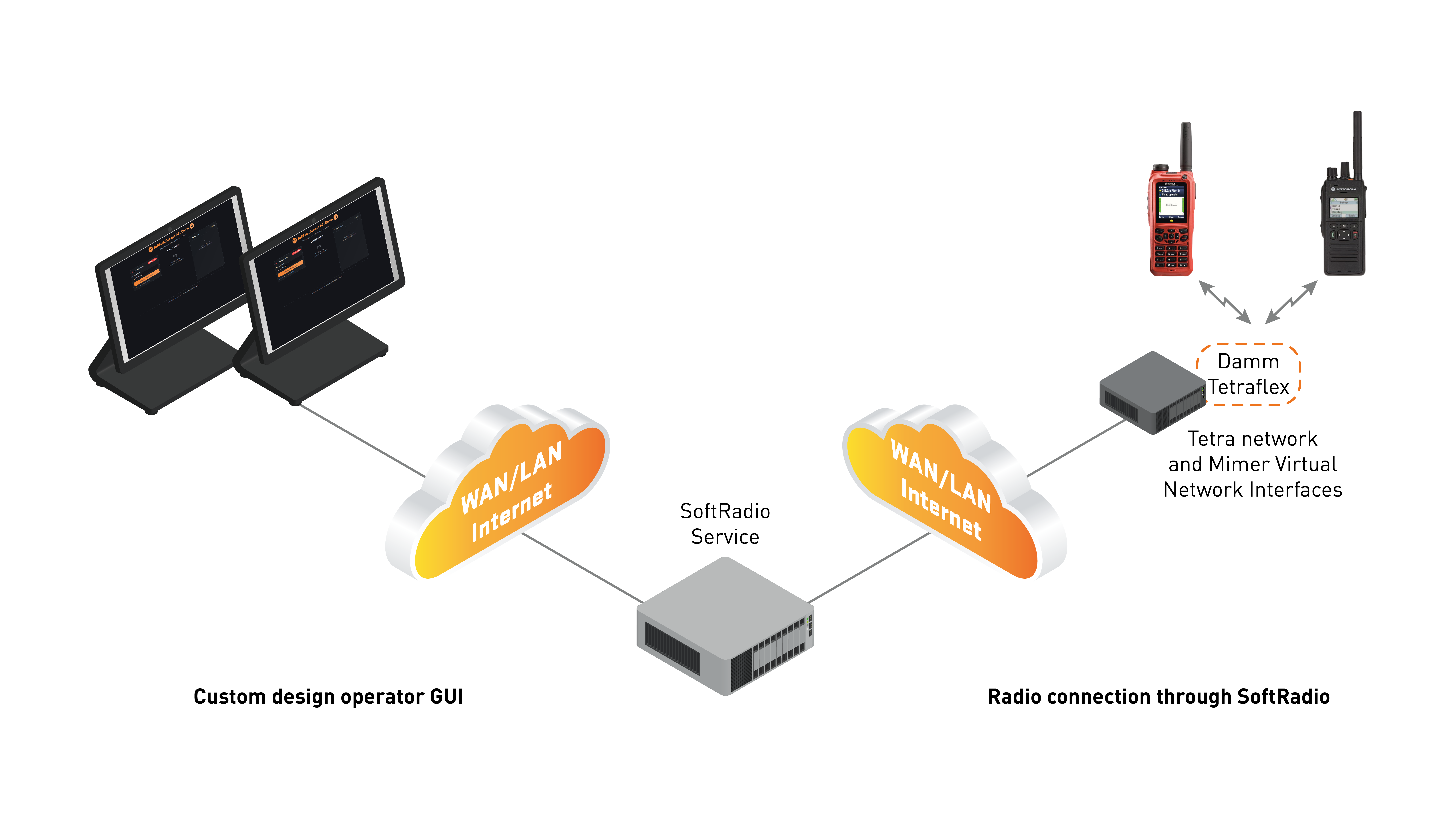
Industry integration
Industrial companies integrating radio control directly into their own operational software, removing the need for standalone radio equipment at the operator desk.
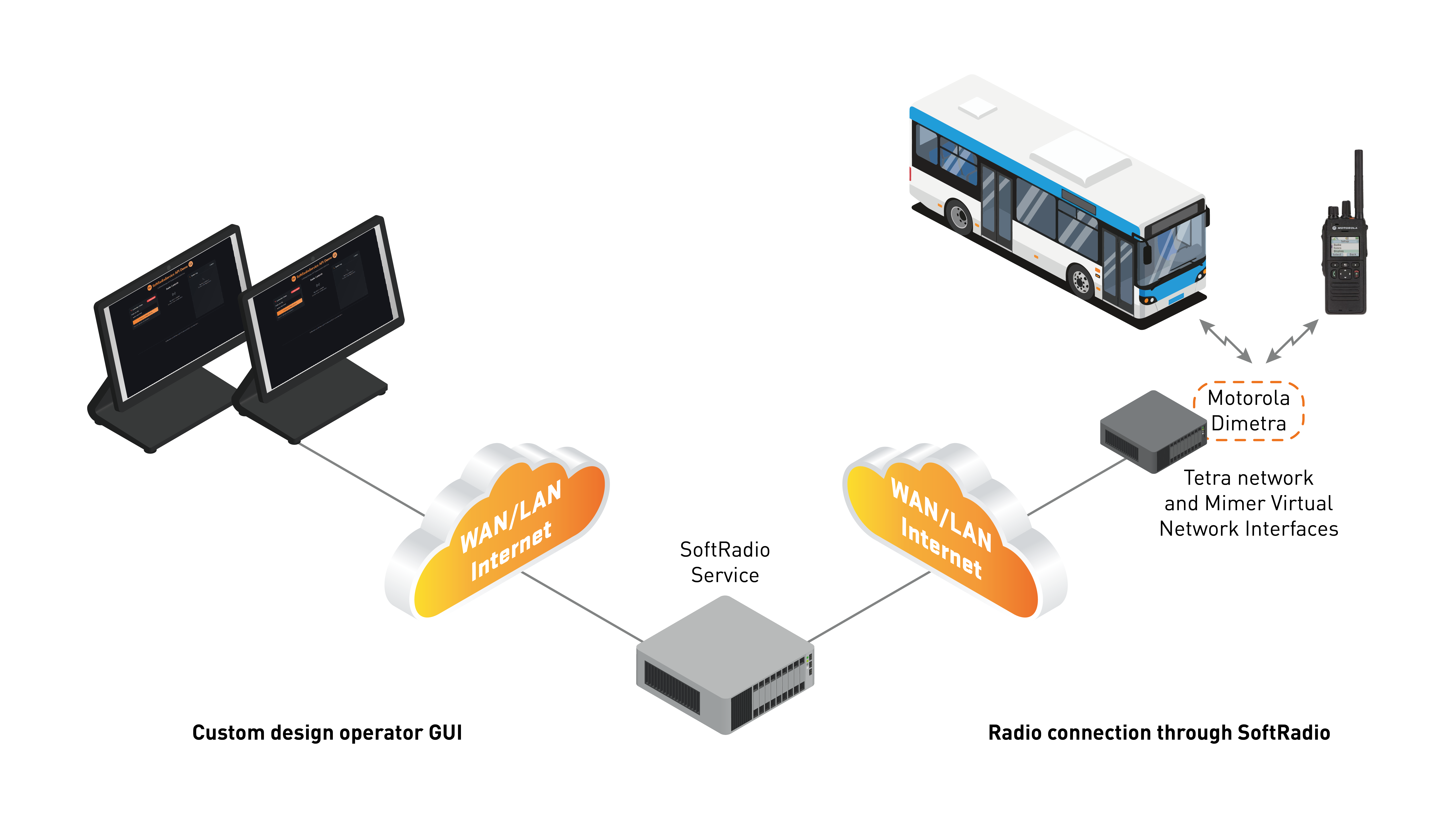
Transit dispatch
Bus and train operators embed radio control into their existing dispatch systems, replacing standalone radio hardware at the operator desk.
What is SoftRadio Service?
Mimer SoftRadio Service is a flexible middleware platform that connects almost any radio system (Tetra, DMR, analog) with any operator environment (custom GUIs, PoC systems, SoftRadio clients).
Whether you're building autonomous ship operations, managing airport communications, or developing a third-party dispatch app – this API-driven service is your foundation.
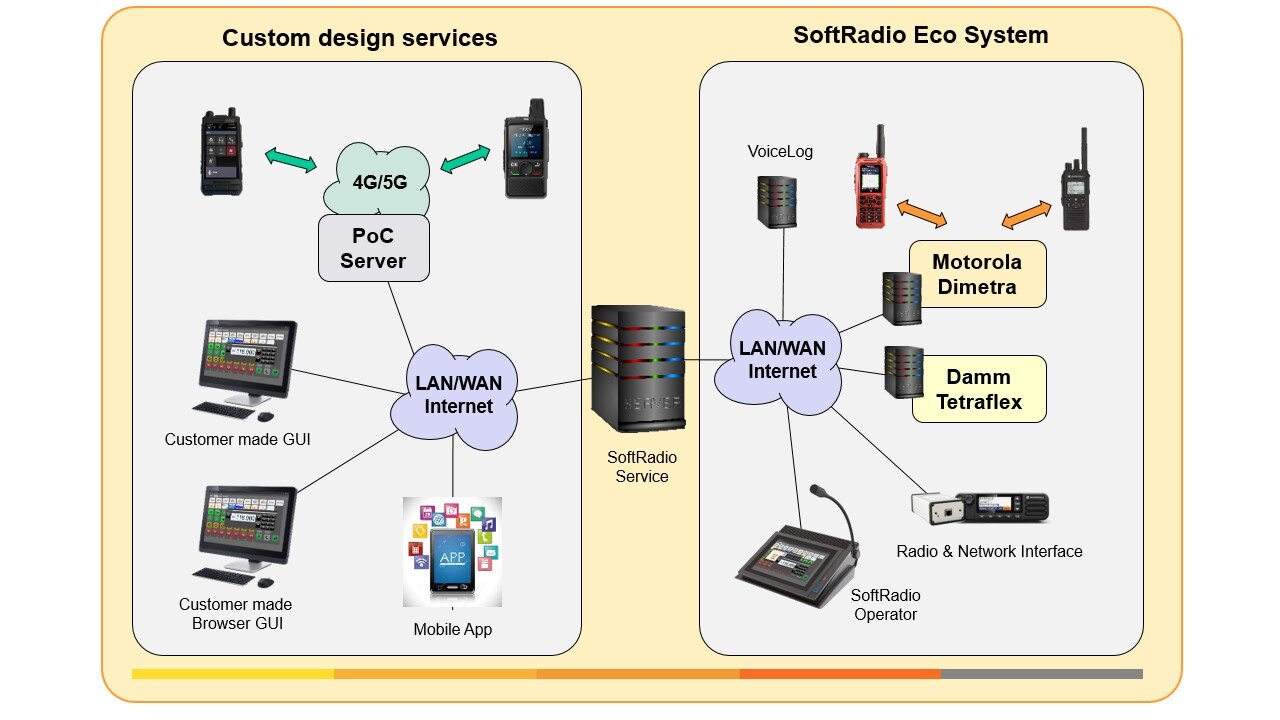
Key Features
Custom Dispatch GUIs
- Build your own operator interface with our API.
- IP-based API – Develop your UI with your own tools for any platform
- Clean integration for developers and end users.
System Examples
Softradio Service - API
What is SoftRadio Service?
How Clients Connect
Functionalities
SoftRadio System Overview
Core Components
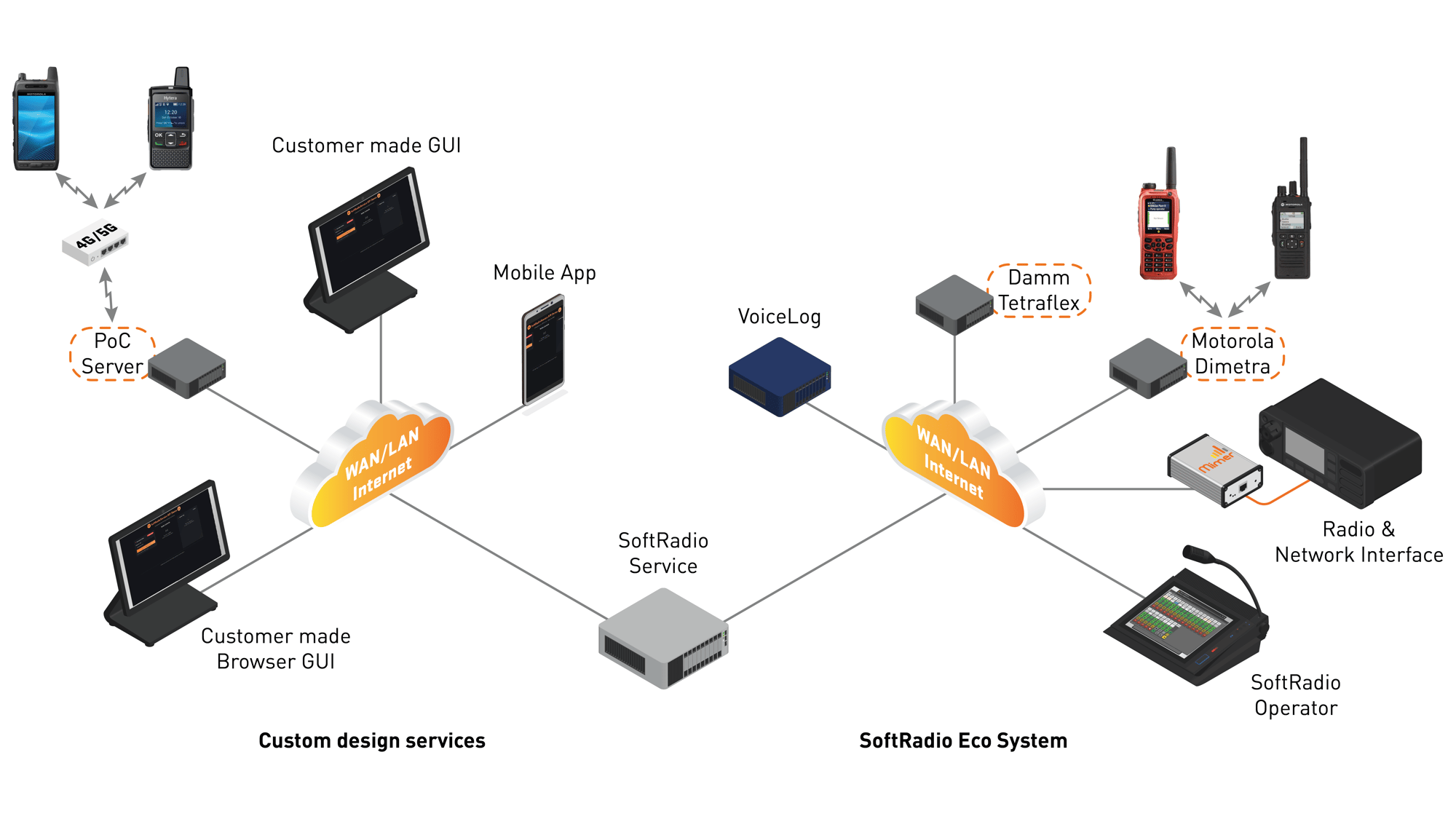
A SoftRadio system consists of three main elements: Radios, Mimer Network Interfaces, and Operators.
- Mimer Network Interfaces are hardware and virtual softwares units developed by LS Electronics, preconfigured for specific radio models.
- Operators use Mimer SoftRadio, a Windows-based dispatcher application that communicates with Mimer Network Interfaces via the proprietary Mimer protocol.
- Operators remotely control radios through the SoftRadio client over TCP (internet) or UDP (local network). The Mimer Network Interface processes and forwards commands, such as transmitting, changing channels, and handling calls.
- VoiceLog is a logging software that records all radio and intercom audio traffic, storing files securely with metadata for search, playback, and export.
- RadioServer/ NetworkRepeater/ Multi X-Bridge Handles the IP stream between multiple nodes and when needed converts between UDP and TCP.
Shared Access & Virtual Interfaces
Mimer Network Interfaces broadcast data on the local network, allowing multiple operators to control a single radio, see the same display, and hear the same audio. This also enables Mimer VoiceLog to record transmissions.
In some setups, Mimer Network Interfaces exist as software-based Virtual Network Interfaces, used for API connections to dispatcher systems (e.g., Tetra networks).
MimerID & Identification
Each Operator and Mimer Network Interface has a unique MimerID which ensures proper routing of commands and recordings in the system.
Technical Overview |
Flexible Licensing & Pricing |
For Developers & Integrators |
|||
|---|---|---|---|---|---|
| Feature | Details | Description | Details | Feature | Details |
| Runs on | Windows & Linux | By number of operator connections | Scalable options | Environment | Develop in Windows/Linux or web |
| API | WebSocket-based, JSON format | Tiered packages | Custom UI Support | Build your own operator UI or dispatch app | |
| Audio | WebRTC connections | API Access | Provided post-NDA | ||
| Operator Interfaces | Custom UI via API | ||||
| Supports | Group calls, text messaging, emergency (depending on system) | ||||
| Deployment | - | Ask us about partner access or integration projects. | |||